Omaha Poker: Pokerist
KamaGamesCard
4.6221.00 Reviews
- Version
- 75.8.0
- Installs
- 500.00K
- Age Rating
- Teen
Screenshots
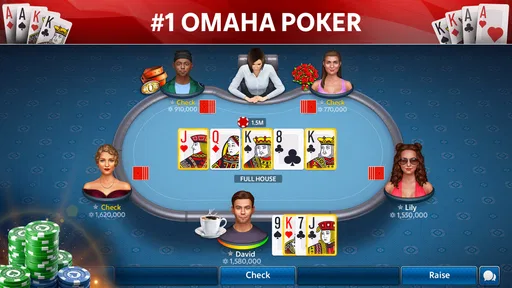

Our Review of Omaha Poker: Pokerist
 Analysis by Appyee
I spent time with Omaha Poker: Pokerist as a mobile card game, and my first impression was that it understands the appeal of Omaha better than many quick-play poker apps do: every hand gives you more possibilities, but also more ways to talk yourself into a bad decision. That extra complexity makes a short session feel active rather than automatic. I could open it when I had a few spare minutes, play a handful of hands, and still feel that I had something to think about.
The game comes from KamaGames and is free to install, though optional purchases range from $0.99 to $999.99 per item. That combination matters. You can try the core experience without paying at the door, but the surrounding economy deserves attention if you intend to play regularly. My recommendation is positive for people who already enjoy poker strategy and want a social mobile table, but more cautious for anyone looking for a completely relaxed, no-pressure card game.
Why the first week feels so inviting
The strongest part of the early experience is the rhythm of Omaha itself. You are not simply waiting for one obvious card combination. You receive more private cards than in the most familiar poker format, then have to build the best hand using the required combination of your cards and the shared cards. That rule changes the way I read every board. A hand that looks promising at first can quickly become awkward when the community cards reveal competing possibilities.
That makes the opening sessions feel rewarding even before I had settled into a consistent playing style. I was constantly asking practical questions: Which of my cards actually work together? Am I drawing toward a strong hand or merely hoping? Does the board help me, or does it give everyone else more ways to beat me? Those questions give the app more staying power than a card game based mostly on quick reactions.
The social setting also helps the first-week appeal. The store presents it as a game built around playing with a large player community, and the experience is clearly aimed at people who enjoy sitting at a table rather than solving solitary puzzles. I found that useful when I wanted a more lively alternative to offline card apps. A table creates a sense of occasion, even when I was playing from a sofa during a short break.
At the same time, the game is approachable enough for a poker fan who knows the basics but has not played much Omaha. I would still advise new players to slow down rather than copy the pace of experienced tables. The extra cards can create an illusion of strength. Having several attractive possibilities is not the same as holding a reliable hand, and learning that distinction is where much of the early education happens.
The best way to learn without burning through resources
My most useful early habit was to treat the first sessions as observation practice. Instead of trying to win every pot, I paid attention to which starting combinations continued to look good after the shared cards appeared. This is a more valuable lesson than memorizing a handful of exciting hands. Omaha rewards connected cards and realistic draws, but the exact value of a hand depends heavily on the board and on what other players are likely to hold.
I also found it helpful to review decisions immediately after a hand rather than judging them only by the result. Winning with a weak decision can teach the wrong lesson, while losing with a sensible fold does not necessarily mean the fold was a mistake. That mindset is particularly important in a free-to-start game, where the temptation is to chase the next hand simply because it is available.
Players should also understand the difference between the app being free and the experience being cost-free. You can begin without an upfront purchase, but the listed in-app purchase range reaches very high amounts. I would set a personal spending boundary before becoming invested in the table atmosphere. If you prefer games where the only meaningful progression comes from play rather than optional purchases, this is a point to weigh carefully from the start.
What makes the game more than a basic poker simulator
Its main strength is not that it replaces a physical poker table perfectly. A phone cannot reproduce the full social atmosphere of sitting across from friends. Instead, it compresses the decision-making part into a convenient format. I can play when arranging a real game would be impossible, and the Omaha rules provide enough depth to keep the session from becoming mindless.
That makes it a better fit than a simple solitaire app for someone who wants interaction and strategy together. It is also more demanding than a casual Texas Hold’em game, because familiar instincts do not always transfer cleanly. Players who enjoy calculating outs, comparing board textures, and managing risk will find more to examine here than in a purely luck-driven card title.
What remains useful after the novelty fades
The real test for a mobile game is not whether the first week is entertaining. It is whether I can imagine returning a month later without needing a new gimmick. In this case, the answer depends largely on how much I enjoy the underlying Omaha decisions. The game does not need a constant stream of novelty to remain interesting for a player who likes improving at one format, but it may feel repetitive to someone who needs frequent changes in objectives.
For me, the recurring value comes from refining judgment. I can return with a different goal each session: play fewer marginal hands, avoid overvaluing a single draw, observe opponents before committing chips, or practise folding when the board becomes dangerous. Those goals are small, but they turn ordinary matches into deliberate practice. The app works best when I bring that sense of purpose instead of expecting the game to manufacture motivation every time I open it.
There is also a useful difference between playing to pass time and playing to build a habit. A short session can be satisfying if I decide in advance that I am only going to focus on one aspect of decision-making. For example, I might concentrate on position and patience rather than chasing every possible combination. That approach reduces the feeling that each session must produce a big result, which is important for keeping the game enjoyable over time.
Still, this is not a universal long-term game. If your interest in poker comes mainly from tournaments, dramatic elimination rounds, or playing with a fixed group of friends, a dedicated alternative may suit you better. This app’s value is strongest when you want accessible Omaha tables and are comfortable with the unpredictability of a broader player community.
How it compares with familiar alternatives
Compared with a standard Texas Hold’em app, this game asks more from the player before the action even begins. Hold’em can be easier to read because each player has fewer private cards and the common hand patterns are more familiar. Omaha creates more potential combinations, which makes it richer for analysis but less forgiving when I rely on surface-level impressions.
Compared with offline poker, the advantage is convenience. I do not need to coordinate a group, find a table, or wait for a suitable evening. The trade-off is that the social experience is less personal, and mobile play can encourage faster decisions than I would make across a real table. I recommend using the app for regular practice and casual access, not as a complete replacement for every kind of poker experience.
Compared with single-player card games, it offers more human unpredictability but also more emotional friction. An opponent’s decision can feel harder to interpret than a fixed computer rule, and a losing streak may be more irritating because another player is actively involved. If you want a calm game that never pressures you to react to a table, solitaire or a puzzle-based card app is likely a better choice.
The maintenance burden of keeping it enjoyable
There is no complicated setup routine that dominates my time, but maintaining a healthy relationship with the game takes discipline. The biggest task is managing attention and spending. Because the game is free to start and presents optional purchases, I would decide beforehand whether I am treating it as entertainment with a fixed budget or as a no-spend experiment. Leaving that decision vague makes it easier to play emotionally after a disappointing hand.
I also recommend checking the app’s current requirements before installing it on an older device. The minimum operating system is Android 6.0, so compatibility is not aimed only at the newest phones, but performance can still vary with hardware, storage, and background activity. A card table should feel responsive; if your phone is already struggling with other games, the experience may be less comfortable than expected.
Keeping the game enjoyable also means choosing the right session length. Omaha rewards concentration, and I noticed that rushed play made the app feel more frustrating than it needed to be. If I opened it while distracted, I was more likely to call with a hand that needed a fold or continue playing simply because I had already invested in the pot. A short, intentional session works better than leaving it open while doing several other things.
The current version is 75.8.0, and the game has been available since September 5, 2017. That long presence suggests a product designed for continued operation rather than a brief experiment, but longevity alone does not guarantee that every player will enjoy the routine. I would judge it by whether the table decisions remain interesting for you, not merely by how long it has been around.
Where regular players may start feeling tired
The first source of fatigue is repetition. Omaha has depth, but the basic loop remains table, hand, decision, result, and another hand. If I am not actively learning or enjoying the social atmosphere, that loop can begin to feel mechanical. The game is strongest when I care about improving my reads; it is weaker when I expect every session to feel dramatically different.
The second issue is variance. Even a thoughtful decision can lose, and a player who wants steady progress may find that discouraging. The extra possible combinations can make a bad result feel especially confusing because several outcomes seemed plausible. I had to separate strategic review from emotional reaction, otherwise the next hand became an attempt to recover rather than a fresh decision.
The third concern is the purchase structure. A free entry point is convenient, but the wide listed price range for optional items means cautious players should not assume that all long-term engagement will feel equally comfortable without spending. I would skip the game if the presence of purchasable resources makes you feel pressured, distracted, or tempted to chase losses. There are other card games that provide a cleaner fit for a strictly controlled budget.
Finally, the Teen content rating is worth considering for families. It is not a children’s card game in presentation or theme, and parents should decide whether the competitive table environment and optional purchases are appropriate for the person using the device. That is not a criticism of the format; it is simply part of choosing the right audience.
Who should make room for it
I think this is a good choice for a player who already knows basic poker and wants to explore Omaha without waiting for a physical group. It also suits someone who enjoys studying decisions in small pieces. You can use a commute break, an evening wind-down, or a quiet period at home to practise patience and board reading, provided you are not playing while distracted.
A realistic everyday scenario would be a player with fifteen minutes before an appointment. Rather than starting a long console game, they open a few Omaha hands, focus on folding weak combinations, and stop when the time is up. That works because the game’s value is concentrated in individual decisions. It does not require a large uninterrupted block to offer something meaningful, although a rushed player should avoid making important choices while multitasking.
I would skip it if you dislike competitive card games, want a completely offline experience, or feel uncomfortable with free-to-play purchase systems. I would also point beginners toward a slower learning environment if the Omaha rules are entirely new. The app can help you learn through play, but it does not remove the need to understand hand construction and board interaction.
The audience response is encouraging: it holds a 4.6 average from around 7.7 thousand ratings, with more than 500 thousand installs and 221 written reviews. Those figures suggest a meaningful level of interest, but they should not decide the purchase for you. The important question is whether Omaha’s extra complexity sounds enjoyable rather than burdensome.
My long-term verdict
After the initial excitement settles, I still see a reason to keep this game installed, but that reason is specific. It is not endless variety; it is the repeatable challenge of making better Omaha decisions in a convenient social setting. When I approach it as a strategy habit, it has recurring value. When I open it only for stimulation, the familiar hand cycle can become tiring.
My strongest advice is to create boundaries before your first serious session: decide how much time you want to spend, choose whether you will make purchases, and review decisions instead of chasing results. Those three habits address the main weaknesses without taking away the fun. They also make the game feel more like a useful poker practice space and less like an automatic time filler.
The lasting appeal comes from learning to distinguish genuine hand strength from attractive-looking possibilities. That lesson is specific to Omaha and gives the app more substance than a basic card pastime. KamaGames has built a free-to-start option for players who want accessible tables, but the best experience belongs to people who can manage the competitive pace and the optional spending structure.
My final recommendation is to try it if you enjoy poker strategy, want Omaha on a mobile device, and are willing to play with patience. Keep looking if you want a quiet solo game, a fixed social group, or a completely pressure-free economy. For the right player, it earns lasting space because each return can have a clear purpose: not just playing another hand, but making a smarter decision than the last one.
Verdict
Strengths of Omaha Poker: Pokerist
- Easy-to-learn Omaha rules suit both beginners and experienced poker players.
- Play-money tables let users practice without risking real money.
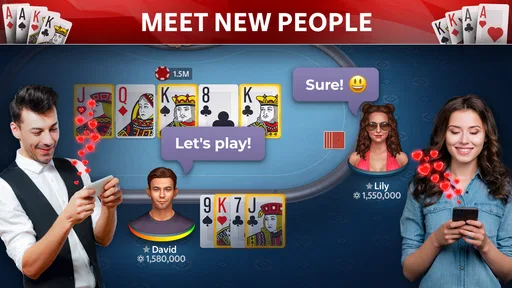
- Multiplayer rooms provide a lively experience against players worldwide.
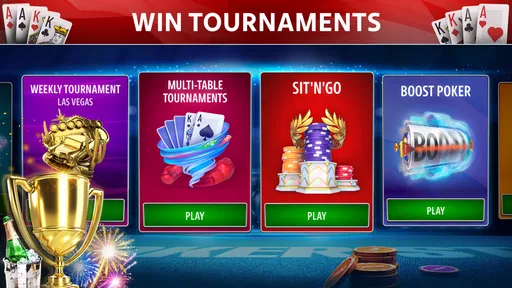
- Regular events and tournaments add variety beyond standard cash tables.
- The interface makes it simple to track cards, bets, and community action.
Limitations of Omaha Poker: Pokerist
- Omaha’s four-hole-card strategy can feel overwhelming for Texas Hold’em players.
- Progress may feel slow without spending chips on in-app purchases.
- Random opponents can create unpredictable and occasionally frustrating tables.
- Online play requires a stable connection to avoid missed actions or disconnections.
- Frequent notifications and promotional offers may distract from the poker experience.
Other Releases by KamaGames
View All


Similar Picks in This Category
View All
Solitaire - Classic Card Games
MobilityWare4.6

UNO!™
Mattel163 Limited4.3

Spider Solitaire: Card Games
MobilityWare4.6

Solitaire.com - Classic Cards
Tripledot Studios Limited4.7

Plants vs. Zombies™ Heroes
ELECTRONIC ARTS4.1

Hearthstone
Blizzard Entertainment, Inc.4.1
Frequently Asked Questions
What is Omaha Poker: Pokerist, and how does the game work?
Omaha Poker: Pokerist is a digital poker game focused on Omaha-style gameplay, where each player receives four private cards and must use exactly two of them together with three community cards to make the best five-card hand. The app is designed for online play, allowing you to join tables, compete against other players, and practice your decision-making in a casino-style environment.
Can I play Omaha Poker: Pokerist for free?
Yes, the game can generally be downloaded and played without an upfront purchase. It typically uses virtual chips for its tables, so you can enjoy the core poker experience without immediately spending real money. However, free chips may be limited, and the app can include optional in-app purchases or promotional offers. Check the store listing and payment settings before buying anything.
Does Omaha Poker: Pokerist involve real-money gambling?
The game is primarily presented as entertainment using virtual currency rather than a platform for withdrawing real cash. Even so, the poker format and chip-based progression can feel similar to real-money gambling, especially when optional purchases are available. Players should review the current terms, local laws, age requirements, and spending controls, and should never treat virtual chips as a way to earn guaranteed income.
Can I play Omaha Poker: Pokerist offline or without an account?
An internet connection is normally required because the game depends on online tables, player matchmaking, events, and server-based account progress. Some introductory features may be accessible shortly after installation, but the main multiplayer experience is intended for connected play. Depending on the version and device, you may also need to sign in or create a profile to save progress and access social features.
Is Omaha Poker: Pokerist suitable for beginners?
It can be a good starting point for players who already understand basic poker concepts, but complete beginners should learn Omaha’s most important rule before joining competitive tables: exactly two private cards must be used in the final hand. The app’s table-based format helps you gain experience, although fast opponents, betting decisions, and virtual-chip management may require patience and practice.
Play our best games!


